
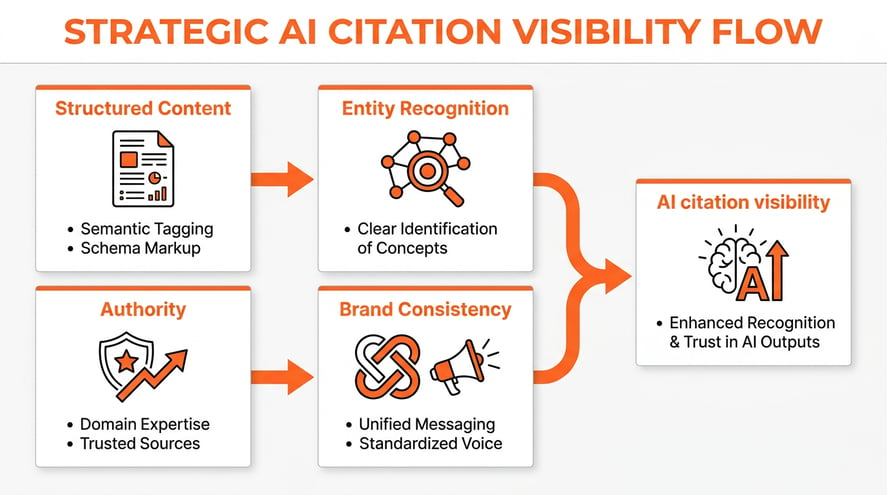
The opportunity lies in understanding that marketing teams can increase citation likelihood by aligning four strategic levers: authority building, structured content architecture, entity recognition, and brand consistency across the web. This framework helps businesses prioritize technical and editorial actions that strengthen both traditional search performance and AI-driven visibility. Performance Marketing Advisors partners with growth-focused organizations to build these sustainable organic strategies that reduce paid channel dependency.
The path to AI citation visibility centers on a core principle: ChatGPT and similar language models reference sources that demonstrate clear expertise, consistent messaging, and structured information architecture throughout the digital ecosystem. When AI systems access live web content, they prioritize sources that remove ambiguity about what topics a business covers and why that business should be trusted on those subjects. This principle translates into four operational pillars that marketing teams can control and measure.
|
Pillar |
Why It Matters for AI Visibility |
Key Actions |
Expected Impact |
Ownership |
|---|---|---|---|---|
|
Content Architecture |
Language models parse structured, clearly labeled information more reliably than scattered content |
Create answer-first pages, use descriptive headings, implement schema markup, build topic clusters |
15-25% improvement in content discoverability and extraction accuracy |
Content Team |
|
Authority Signals |
Backlinks and co-citations help AI systems identify credible sources within specific subject areas |
Earn editorial links, publish expert-authored content, optimize author bios, build industry relationships |
20-40% increase in topical authority recognition within 6 months |
SEO/PR Teams |
|
Entity Recognition |
Consistent brand-topic associations help models understand what expertise a company represents |
Standardize product descriptions, maintain executive profiles, align schema data, secure knowledge panel accuracy |
30-50% stronger brand-subject connections in search results |
Marketing Ops |
|
Brand Consistency |
Conflicting information creates uncertainty that reduces citation confidence |
Synchronize messaging across owned channels, directories, social profiles, and partner sites |
25-35% reduction in brand ambiguity signals |
Brand/Content Teams |
No marketing team can guarantee ChatGPT citations, as AI models can generate inconsistent results and even fabricated references. However, businesses that systematically strengthen these four pillars create the conditions where AI and traditional search visibility compound together, improving the probability of accurate citations while building sustainable organic growth.
Consider two software companies explaining "customer retention strategies." Company A buries their definition in paragraph four after discussing company history and mission statements. Company B opens with "Customer retention strategies are systematic approaches to keep existing customers engaged and reduce churn rates." Guess which one ChatGPT cites more often? When marketing teams ask what content structure helps ChatGPT reference a brand in AI-generated responses, the answer centers on making expertise immediately accessible through clear organization.
Start each page with direct definitions and concise summaries before diving into supporting details. AI systems process structured information more reliably than creative marketing copy. When you bury your main point in paragraph three, you reduce your chances of being cited. According to OpenAI's citation formatting guidelines, models work best with clearly labeled content sections that can be easily retrieved and referenced.
Structure content using descriptive headings, FAQ blocks, comparison tables, and numbered lists that break complex topics into digestible pieces. Each section should address one specific concept while connecting to your broader expertise area. This modular approach aligns with proven topic cluster strategies and AI search optimization tactics that help both traditional search engines and AI systems understand your content hierarchy.
A page that explains one subject exceptionally well typically outperforms content trying to rank for dozens of loosely related terms. Research on AI search citing patterns shows that quality and credibility signals matter more than keyword density for earning citations. Teams should prioritize creating comprehensive, authoritative coverage of specific topics rather than spreading thin across multiple concepts on single pages.
Building on structured content foundations, authority signals work differently for ChatGPT than traditional search engines. Recent research shows that large language models prioritize trust indicators and curated context over raw backlink volume when selecting which sources to reference. For marketing teams, this means focusing on quality connections and clear entity recognition rather than chasing link quantity.
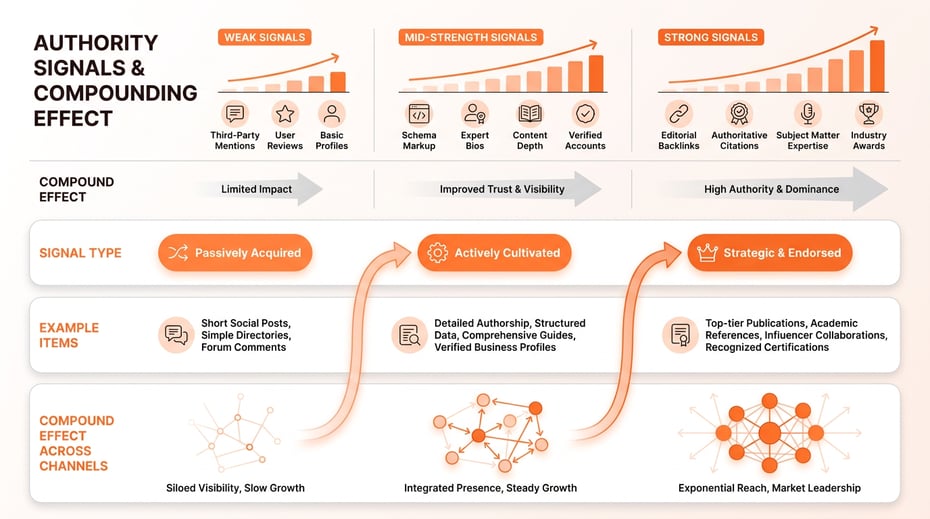
When AI systems like ChatGPT evaluate sources for citations, they look for clear, unified signals about who you are and what you represent. Conflicting brand descriptions, varying product language, and inconsistent author information create ambiguity that reduces confidence in referencing your business. The question of how brand consistency across the web improves the chances of being referenced by ChatGPT comes down to removing confusion and improving brand recognition.
Mixed messaging prevents AI platforms from understanding your brand's expertise and authority. When your website describes your CEO as "Chief Executive Officer" but LinkedIn shows "Founder and CEO," or when product descriptions vary between your site and partner directories, you create entity disambiguation problems. Google's Knowledge Graph relies on aligned entity signals to build confidence scores. Inconsistent data weakens these signals and reduces the likelihood of accurate citations.
To address these disambiguation challenges, marketing teams need standardized brand descriptors, executive biographies, and product definitions across all priority digital channels. Create a master document that defines your company description, leadership titles, product categories, and core messaging. Apply this framework to your website, social profiles, directory listings, press mentions, and partner pages. Structured data markup should use identical organization names, descriptions, and sameAs properties across platforms to strengthen entity recognition. This approach aligns with broader AI marketing strategies that reduce operational complexity while improving discoverability.
Synchronized messaging across key brand presence points reduces content waste while strengthening discoverability. When teams align on standardized language and structured data, they eliminate duplicated effort in content creation and improve AI search optimization results. Citation formatting systems work more reliably when source information remains stable. This governance approach supports both traditional SEO performance and emerging AI-driven visibility, creating compound returns on content investments.
Marketing leaders face specific implementation concerns and measurement challenges when building AI-ready content strategies. These answers address the most common questions about incremental optimization, technical concepts, and performance tracking that impact citation likelihood.
Start with your highest-traffic pages and implement structured data markup incrementally. Focus on adding clear headings, FAQ sections, and concise answer blocks to existing content. Create topic clusters around your core expertise areas to strengthen topical authority without requiring new page architecture.
Entity recognition helps AI systems understand what your business represents and connects you to relevant topics. When your brand name consistently appears alongside specific products, expertise areas, and leadership information across the web, AI models can more confidently reference you as a credible source for related queries.
Focus on leading indicators you can control: organic search visibility improvements, branded search volume increases, and content performance metrics. Research demonstrates ChatGPT citations are frequently unreliable, so track authority building and entity strength rather than direct AI mentions as your primary success metrics.
ChatGPT discovers content through web browsing and plugin integrations rather than direct submissions. Your best approach is making content easily discoverable through search engines, maintaining clean site architecture, and building authoritative backlinks that signal expertise to both traditional search and AI systems.
The businesses most likely to earn ChatGPT citations share common traits: they make expertise easy to verify, content easy to parse, and brand meaning consistent across the web. When marketing teams align content structure, authority signals, entity recognition, and brand consistency, they create the conditions where AI systems can confidently reference their expertise.
The next step involves converting this framework into an actionable operational plan. Start by auditing your priority pages for structured data gaps, evaluating authority signals across owned and earned channels, and identifying brand consistency issues that create confusion. Your AI-driven search visibility strategy should include measurable milestones for schema implementation, content restructuring, and monitoring mention frequency and source attribution to track progress over time.
The opportunity extends beyond individual citations. Companies that optimize for AI discoverability often see improvements in traditional search rankings, content engagement, and brand recognition. This integrated approach reduces dependency on paid channels while building sustainable organic growth momentum that compounds over time.
Ready to transform fragmented marketing efforts into a cohesive strategy that maximizes AI visibility and organic performance? Performance Marketing Advisors helps ambitious organizations build scalable, data-driven marketing ecosystems that drive measurable results across all channels.