
Ready to build sustainable organic growth that reduces your reliance on paid channels? Schedule a strategic consultation with Performance Marketing Advisors to transform your fragmented marketing efforts into cohesive, data-driven strategies that maximize ROI for your financial institution.
The way people discover and evaluate regional banks is evolving alongside new search technologies. Google's AI Overviews now handle billions of queries, fundamentally shifting how consumer behavior banking decisions unfold. Instead of clicking through multiple websites to compare options, consumers increasingly rely on AI-generated summaries that present curated information from trusted sources.
When someone searches for "best checking account with no monthly fees," AI systems don't just return a list of links anymore. They combine information from multiple sources to create comprehensive overviews that highlight specific institutions based on clear rate structures, transparent fee disclosures, and strong expertise signals. Banks and credit unions with well-documented policies, expert-authored content, and consistent local data across platforms receive priority placement in these AI-generated summaries. The CFPB reports that consumers increasingly expect immediate, accurate answers about financial products without visiting multiple websites.
Building on this shift toward immediate answers, traditional SEO focused on driving clicks to your website. AI search often provides complete answers without requiring users to leave the search results page. Your content must now satisfy intent at the point of discovery, not just after someone visits your site. This means product descriptions, rate tables, and eligibility requirements need to be structured for machine comprehension while remaining compliant with financial regulations. A comprehensive content strategy that balances AI optimization with traditional SEO is necessary for maintaining visibility across all search experiences.
This evolution toward AI-powered discovery also transforms how people phrase their searches. Search patterns are shifting from keyword-based queries like "auto loan rates" to conversational requests such as "credit union near me with same-day auto loan approval." These longer, more specific queries often include location modifiers and immediate action intent. Regional banks that optimize for these conversational patterns while maintaining accurate local business information across all platforms capture more qualified prospects. Strategic planning for 2026 should account for this shift toward personalized, location-aware responses that connect directly to actionable next steps like appointment booking or application initiation.
AI Overviews fundamentally change how search results appear by synthesizing information from multiple sources into concise summaries. For regional banks and credit unions, this means your content must be structured in ways that AI systems can easily parse and understand. Structured data markup becomes your competitive advantage, helping AI systems identify your rates, fees, branch locations, and product details for inclusion in these summaries. Clear comparison tables, FAQ sections, and well-organized product information increase your chances of being selected as a source, while poorly structured content receives less consideration.
Beyond content structure, entity optimization becomes more critical for AI overviews banking SEO as systems work to disambiguate and connect your brand, branches, products, and leadership team across the knowledge graph. Your institution needs consistent NAP data, executive bios with clear credentials, and product pages that clearly identify what you offer and where you serve. Conservative AI systems prioritize content that appears authoritative and compliant, making your editorial policies, disclosure practices, and content governance workflows more important than ever for AI search optimization success.
Building strong E-E-A-T for banks and credit unions requires transparent accountability measures that AI systems can easily identify and trust. Publish clear author bios for all financial content, highlighting relevant credentials and experience in banking or finance. Implement editorial policies that include dated disclosures on rate and fee content, ensuring Google's ranking systems can verify freshness and accuracy. These signals become even more important as AI-generated content requires demonstrable expertise to earn inclusion in AI overviews and search summaries.
Together, we can centralize compliance review workflows to maintain accuracy across all digital touchpoints, especially as federal regulators increase oversight of digital marketing practices. Start with a comprehensive E-E-A-T audit to identify gaps in your current compliance processes. Establish clear approval workflows for AI-assisted content, ensuring all rate information remains non-promissory and current. Strengthen local authority signals through first-party research like community financial wellness surveys or homebuying reports. These original insights, combined with documented community involvement programs, create the authentic expertise markers that both AI systems and consumers value when choosing their financial institution.
Consumer search behavior shifted dramatically in 2024, with AI overviews now influencing 60% of financial service discoveries. Regional banks and credit unions that delay optimization risk losing local market share to institutions that appear in AI-generated summaries and voice search results. We recommend a systematic five-pillar assessment that addresses both traditional search signals and emerging AI ranking factors while maintaining your compliance standards.
Begin your 90-day transformation by evaluating the basics that search algorithms prioritize when determining content quality. Google's mobile-first indexing guidelines show that mobile experience directly impacts how AI platforms access and understand your content. Review Core Web Vitals across product pages, ensure HTTPS implementation, and check crawlability for branch locators. When mortgage calculators load slowly, or branch finders break, both human visitors and search algorithms interpret this as poor user experience.
Your content must demonstrate expertise, experience, authoritativeness, and trustworthiness to succeed in AI-powered search results. Google's guidance on creating helpful content emphasizes approaches that prioritize user needs, which search algorithms increasingly reward. Evaluate author bylines, editorial policies, and content freshness across rate pages and financial guides. AI overviews favor institutions that clearly identify subject matter experts and maintain transparent editorial standards, particularly important for credit unions emphasizing member trust and community expertise.
Each branch location represents a distinct opportunity to capture hyperlocal search intent through AI-generated results. Follow Google's business representation guidelines to ensure NAP consistency and proper categorization. Assess your GBP completeness, review response rates, and local content alignment during weeks 3-6 of your activation plan. Search algorithms increasingly surface location-specific answers, making accurate branch data and local engagement signals important ranking factors for both "near me" queries and voice search.
Structured data helps search platforms understand and categorize your financial products accurately. Evaluate your Organization, LocalBusiness, and FinancialProduct schema implementation across key pages. Review how rates, fees, and eligibility criteria appear in structured formats. Break this into manageable pieces that search algorithms can easily parse and compare. This foundation supports inclusion in AI-generated summaries and comparison features that increasingly influence consumer choice.
Your assessment must connect organic search performance to actual business results like account openings and loan applications. We recommend establishing measurement frameworks that track from initial search visibility through CRM conversion data. Our AI search optimization approach emphasizes this connection between technical improvements and revenue outcomes. Structure your 90-day activation sprint around fixing indexation issues, normalizing local data, deploying schema, and refreshing top-performing product pages. Maintain compliance oversight throughout while measuring progress against member acquisition and loan origination goals rather than just traffic metrics.
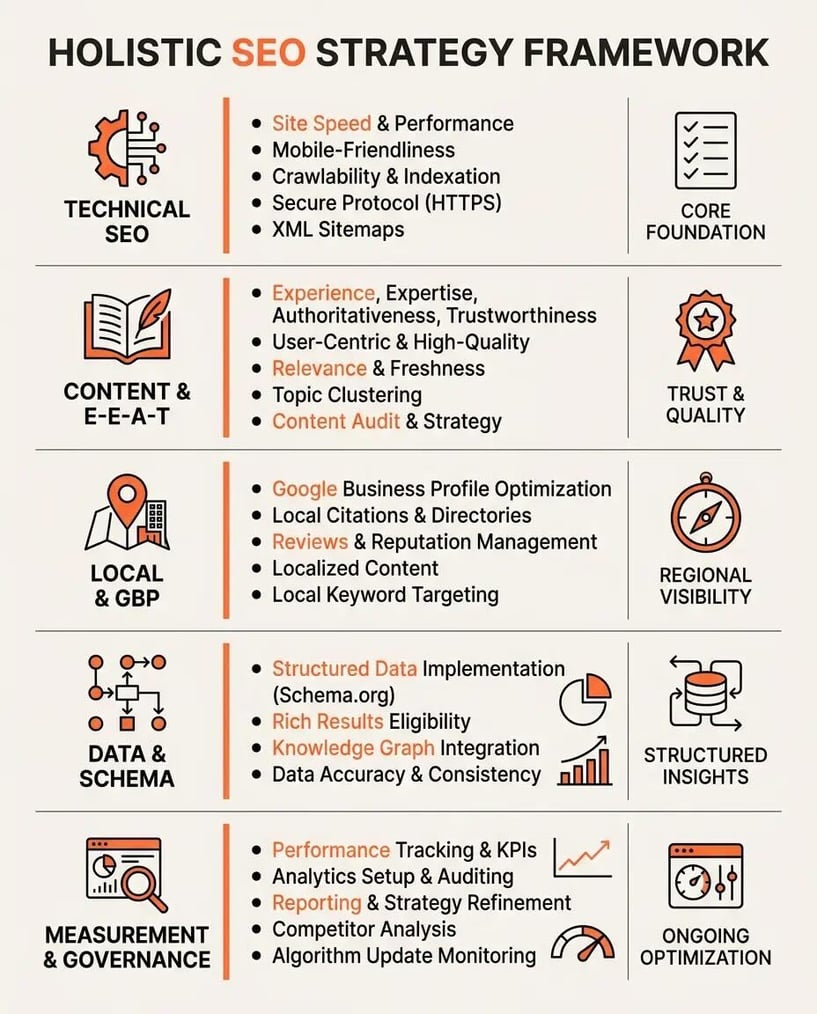
Your technical infrastructure determines whether AI platforms can effectively crawl, understand, and recommend your institution. Search algorithms consistently favor fast, accessible, and well-structured sites when generating answers and recommendations. Technical SEO strategies must evolve as banks prepare for AI-driven search across these foundational areas.
Ready to identify technical gaps limiting your organic growth potential? Our comprehensive SEO audit evaluates Core Web Vitals, crawlability, and indexation specifically for financial institutions, while our accessibility standards demonstrate the compliance framework your institution should implement.
When AI systems encounter your mortgage rates page, they need more than just numbers, they need context, relationships, and machine-readable signals to confidently recommend your institution. Financial services schema markup converts your website content into formats AI systems can easily understand and cite, giving your bank or credit union a competitive advantage in AI-driven search results.
Note that Review schema should be implemented carefully, as many financial institutions have strict policies about displaying customer testimonials and reviews on regulated product pages.
Together, we build a comprehensive data layer that supports both AI search optimization and traditional SEO while maintaining compliance standards. This foundation enables AI systems to understand your institution's complete service offering and present accurate information to potential customers during their research phase.
Your Google Business Profile serves as the foundation for how AI systems understand and present your institution to local searchers. When someone asks an AI assistant about "credit unions near me with Saturday hours" or "banks with notary services," the accuracy and completeness of your GBP data directly influence whether you appear in those results. Here's how to optimize your Google Business Profile for regional banks to capture these AI-driven opportunities:
Regional banks implementing structured hyperlocal optimization typically see 40-60% increases in local search visibility and measurable growth in branch-specific account applications. Our approach to hyperlocal optimization for regional banks centers on building authentic local connections through organized city-to-branch content structures that demonstrate genuine community expertise and streamline conversion paths.
We recommend creating a logical content hierarchy that flows from city overview pages to specific branch locations to individual services. Each city page should highlight local business trends, housing market conditions, and community partnerships that demonstrate your institution's deep market knowledge. Branch pages need unique local proof: staff bios with community involvement, photos of actual locations, and partnerships with local businesses or nonprofits. This approach aligns with proven content clustering strategies that build subject matter expertise while meeting compliance requirements for accurate location-specific advertising.
Our strategy involves matching your content to genuine local financial needs rather than using generic product descriptions across all markets. Commuter-heavy suburbs benefit from auto loan content emphasizing quick approval and competitive rates. Growing residential areas need HELOC information focused on home improvement and expansion financing. Agricultural communities require specialized lending content about seasonal cash flow needs. Focus on equipment financing requirements that matter to local farmers. Each localized page must include current, compliant rate information and clear disclosure links as required by FDIC guidance for digital channels.
We recommend replacing generic "Contact Us" pages with branch-specific conversion experiences that support effective local SEO for credit unions and community banks. Include appointment booking systems that connect directly to local staff calendars, prequalification forms that connect to your local lending team, and CTAs that reference local market conditions. A branch in a college town might emphasize student account opening and first-time homebuyer programs, while a location near a business district focuses on commercial banking and executive services. This localized approach supports the AI-driven search strategies that prioritize user intent completion and local relevance signals.
AI search algorithms evaluate technical factors differently than traditional search, prioritizing sites that can efficiently deliver complete, accurate information for AI-generated summaries. The essential technical SEO elements for regional banks now include strategic consolidation, performance optimization, and intelligent architecture that helps AI understand and surface your offerings. These technical foundations determine whether your institution appears in AI overviews or fails to gain visibility in search results.
Many regional banks create separate pages for minor product variations, diluting their search authority across dozens of similar checking or loan pages. Canonicalization helps search engines understand which version is primary while internal linking concentrates ranking signals. Consolidate thin variants into comprehensive product hubs, then use canonical tags and redirects to point duplicate URLs to the main page. This approach reduces crawl waste and helps AI systems find your most complete product information faster. Consider conducting a comprehensive technical audit to identify consolidation opportunities across your site.
AI search algorithms prioritize websites that deliver excellent user experiences, making Core Web Vitals performance metrics more important than ever. Focus on achieving fast Largest Contentful Paint (LCP) and low Interaction to Next Paint (INP) scores on your highest-traffic product and branch pages. Defer non-critical JavaScript, optimize image loading, and streamline render paths to meet Google's performance thresholds. AI systems use these performance signals as quality indicators when selecting content for overviews and summaries, making fast-loading pages more likely to be featured.
Design your site structure so product hubs connect seamlessly to supporting resources like calculators, FAQs, and comparison guides. This hub-and-spoke approach helps AI overviews find comprehensive answers to complex financial questions within your domain. Link your checking account hub to fee calculators, eligibility requirements, and branch finder tools. This architecture signals to AI systems that your site provides complete, authoritative coverage of topics rather than isolated pages, increasing your chances of being selected for AI-powered search optimization.
When a consumer searches "best checking account with no fees," AI overviews prioritize banks that provide complete rate tables, eligibility criteria, and application steps within a single, comprehensive resource. AI search systems favor content that completely answers user intent without requiring additional clicks. We recommend building your AI search content strategy to prioritize utility over promotion, combining expert insights with interactive tools that demonstrate real value.
We recommend building comprehensive comparison pages that include current rates, fee structures, eligibility requirements, and application processes within a single resource. Instead of separate pages for each checking account variant, develop a master comparison table with filters for minimum balance, monthly fees, and ATM access. Include step-by-step account opening guides with required documents and timeline expectations. Add direct links to schedule branch appointments for a complete user journey. Google's optimization guide confirms that AI features surface content that provides complete, useful answers to user queries.
Combine bylined articles from your lending officers or financial advisors with embedded calculators and prequalification estimators. An auto loan guide authored by your lending manager gains authority when paired with a monthly payment calculator that uses your actual rates. Mortgage content becomes more valuable with a prequalification tool that connects directly to your application system. These interactive elements signal usefulness to AI systems while capturing qualified leads for your sales team. Consider leveraging AI-powered content engines to scale expert content creation while maintaining compliance standards.
Establish a content calendar with monthly rate updates, quarterly policy reviews, and annual compliance audits. Time-stamp all regulated content and document approval workflows for rate changes and product modifications. CFPB regulations require specific APR calculation methodologies and disclosure tolerances that must be reflected accurately in your calculators and comparison tools. Your organic growth strategy depends on maintaining content accuracy, that both AI systems and regulators can trust.
Integrating AI and SEO strategies in regional banking requires more than technical fixes, it demands operational alignment across your marketing, compliance, and technology teams. The institutions that win will connect AI-driven visibility to actual business outcomes while maintaining the governance standards that protect both your organization and your members.
Most banks track website sessions and page views, but AI search fundamentally shifts attribution models. When potential members discover your credit union through an AI overview or voice search, you need to trace that journey from initial discovery through account opening and funding. CRM integration becomes your competitive advantage, connecting organic search touchpoints to applications, approvals, and funded accounts. Set up multi-touch attribution that captures AI-assisted discoveries, even when the final conversion happens in-branch or via phone.
Once you have measurement systems in place, focus on execution through three targeted phases. Weeks 1-4: Fix indexation issues, improve Core Web Vitals, and audit your current structured data implementation. Weeks 5-8: Deploy LocalBusiness schema across all branches, normalize your NAP data, and refresh your Google Business Profiles with AI-friendly content. Weeks 9-12: Update your top 10 product pages with comparison tables, deploy calculator tools, and implement FAQ schema. This phased approach prevents overwhelming your compliance team while building momentum through quick wins.
Responsible AI adoption means documenting every prompt, source, and approval in your content creation process. When using AI for content ideation, maintain human oversight at every step, especially for rate disclosures and product descriptions. The OCC guidance on model risk management allows community banks to take a proportional approach, but you still need clear documentation. Create approval workflows that capture AI assistance while ensuring compliance review happens before publication.
Your AI and SEO tools likely involve third-party relationships that require careful management. The interagency guidance on third-party risk provides a framework for evaluating AI vendors, data processors, and analytics platforms. Document due diligence on data handling practices. Negotiate contract terms that include audit rights and incident reporting requirements. Maintain ongoing monitoring of subcontractors and their data security protocols. Your HubSpot integration and other marketing technology partnerships should include clear data governance agreements. Consider partnering with strategic advisors who understand both AI implementation and financial services compliance requirements.
Regional bank and credit union leaders face unique challenges when implementing AI search optimization, from regulatory compliance requirements to legacy system constraints. These answers address the most common implementation questions while respecting the operational realities of financial institutions.
Focus on completeness and consistency across all profile elements. According to Google's guidance, verified profiles with accurate hours, complete service descriptions, and regular posts perform better in local results. Update your profile weekly with community events, rate promotions, and branch-specific services like notary or safe deposit boxes to provide fresh content signals that AI systems prioritize.
Start with technical foundations: ensure fast loading speeds, mobile optimization, and proper structured data implementation. Deploy Organization, LocalBusiness, and FinancialProduct markup on key pages. Create complete answers to member questions through fee comparisons and eligibility checklists. Establish content governance workflows to keep rate and product information current for AI summarization while maintaining compliance oversight.
Consumers now expect immediate, conversational answers to complex financial questions. They search with phrases like "credit union auto loan preapproval today" rather than generic terms. AI overviews surface institutions with strong trust signals and transparent pricing. Members increasingly discover options through AI-generated summaries rather than clicking through to websites, making your content optimization more important than traditional website traffic metrics.
Focus on AI readiness fundamentals: deploy structured data for products and locations, optimize for conversational search queries, and ensure content answers complete questions. Weeks 1-4: implement technical foundations and schema markup. Weeks 5-8: optimize Google Business Profiles and local content. Weeks 9-12: launch compliance-approved tools and measurement systems. This approach balances AI optimization with regulatory requirements throughout the process.
Connect organic performance to business outcomes through CRM integration and strategic measurement frameworks. Track applications started, prequalifications completed, and accounts opened from organic search traffic. Monitor local pack visibility, entity mention accuracy in AI overviews, and member journey progression. Focus on assisted conversions and complete member experiences rather than traditional metrics like rankings alone.
AI search is reshaping how consumers discover and choose financial institutions. Research shows that Google users are significantly less likely to click through to websites when AI summaries appear in results. Your bank or credit union must adapt now to maintain visibility and drive account growth through organic channels.
To stay competitive in this evolving landscape, you need coordinated action across technical foundations, local search optimization, compliant content, and data management. A structured 90-day activation sprint can standardize your local business listings, implement structured data for better AI comprehension, refresh your top-performing product pages, and connect your website analytics with customer relationship systems. This integrated approach transforms fragmented SEO efforts into a cohesive organic growth strategy for financial institutions that reduces dependency on paid channels while building market-leading visibility.
Ready to partner with us to accelerate your institution's organic performance and reduce reliance on paid marketing? Performance Marketing Advisors specializes in helping regional banks and credit unions build data-driven, full-funnel marketing ecosystems that drive measurable account growth.